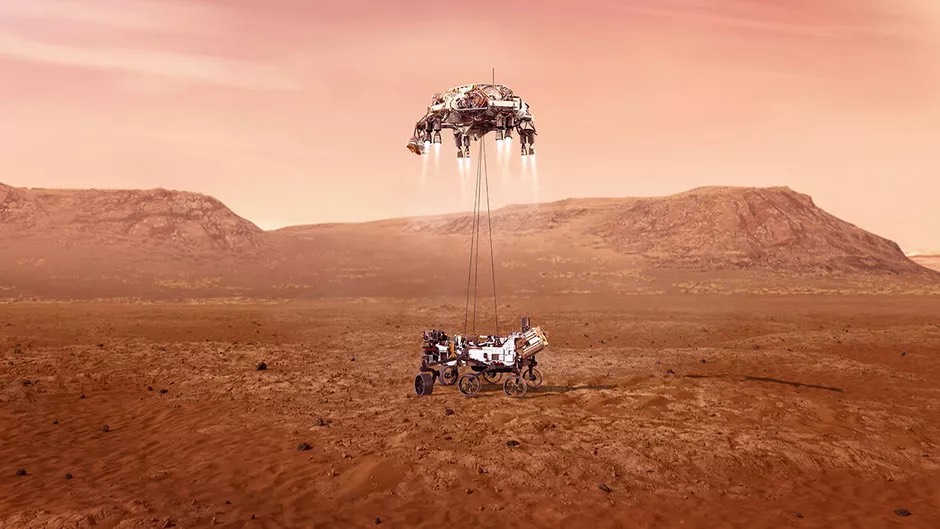
The fifth rover to land on Mars, the Perseverance Rover, was launched on July 20th 2020 and safely landed on the Red Planet on February 18th 2021 at 20:55 GMT. The spacecraft’s incredible journey saw it travel around 472 million kilometres in just over 210 days to reach its landing spot in the Jezero Crater. The goal of this mission is to seek for signs of ancient microbial life on Mars and to test technologies that could one day be useful for human exploration on Mars. The mission is expected to last for at least one Martian year (~687 Earth days).
The rover will drill into the rocky surface of Mars and retrieve rock and “soil” samples which the rover will seal in tight tubes and store on the planet surface. These will be collected by future missions to Mars and it’s hoped that they could all be brought back to Earth by 2031 – the very first time for Martian rock samples. Also tagging along on the ride is the very first Mars Helicopter, Ingenuity, aiming to attempt the first ever powered flight on another planet.
In summary, the 4 main science objectives for the mission:
• To look for habitability and identify ancient environments which may have been capable of supporting microbial life in the past
• To search for signs of microbial life which have been preserved in rocks on the surface of the crater
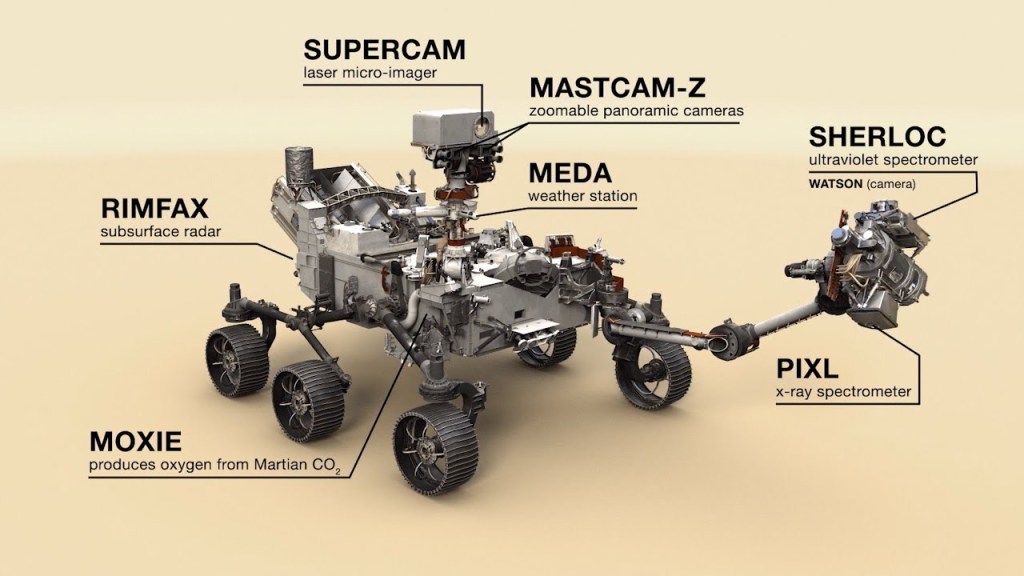
• To prepare for human exploration on Mars by testing oxygen production using the Martian atmosphere and testing new landing technologies
EXCITING THINGS TO NOTE:
– This mission is expected to do a great deal in paving the way for future human exploration of Mars
– FIRST test of powered flight on another planet
– FIRST self-driving rover, designed to be able to self-drive for up to 200m per day while still obtaining data of its tracks
– FIRST rover to carry a microphone allowing us to experience the sound of another planet
– FIRST retrieval of samples from Mars which will one day make their way back to Earth, a huge breakthrough in the study of the Martian terrain and mineralogy.
Photo credits: NASA
 Great British Take Off