Hello World! I thought I’d use my first post to introduce myself and a little bit about the page. I’m originally from Scotland but am currently an MSc Space Explorations Systems student at the University of Leicester and I have a huge passion for space travel & exploration. I started this blog primarily to motivate me to continuously keep up to date with upcoming missions and launches, but also to help inform anyone else who may also be interested in the excitement of watching us here on Earth discover more about the mysteries of the solar system!
If anyone has any particular requests for the blog or any questions about all things space, rockets and missions then don’t hesitate to get in touch via @greatbritishtakeoff on Instagram. #exploringbeyond
The European Space Agency plan to send a fully programmable, autonomous robot to the International Space Station in July 2021. The European Robotic Arm (ERA) will serve the Russian segment of the ISS and will be utilised to support the astronauts in the maintenance of the Space Station.
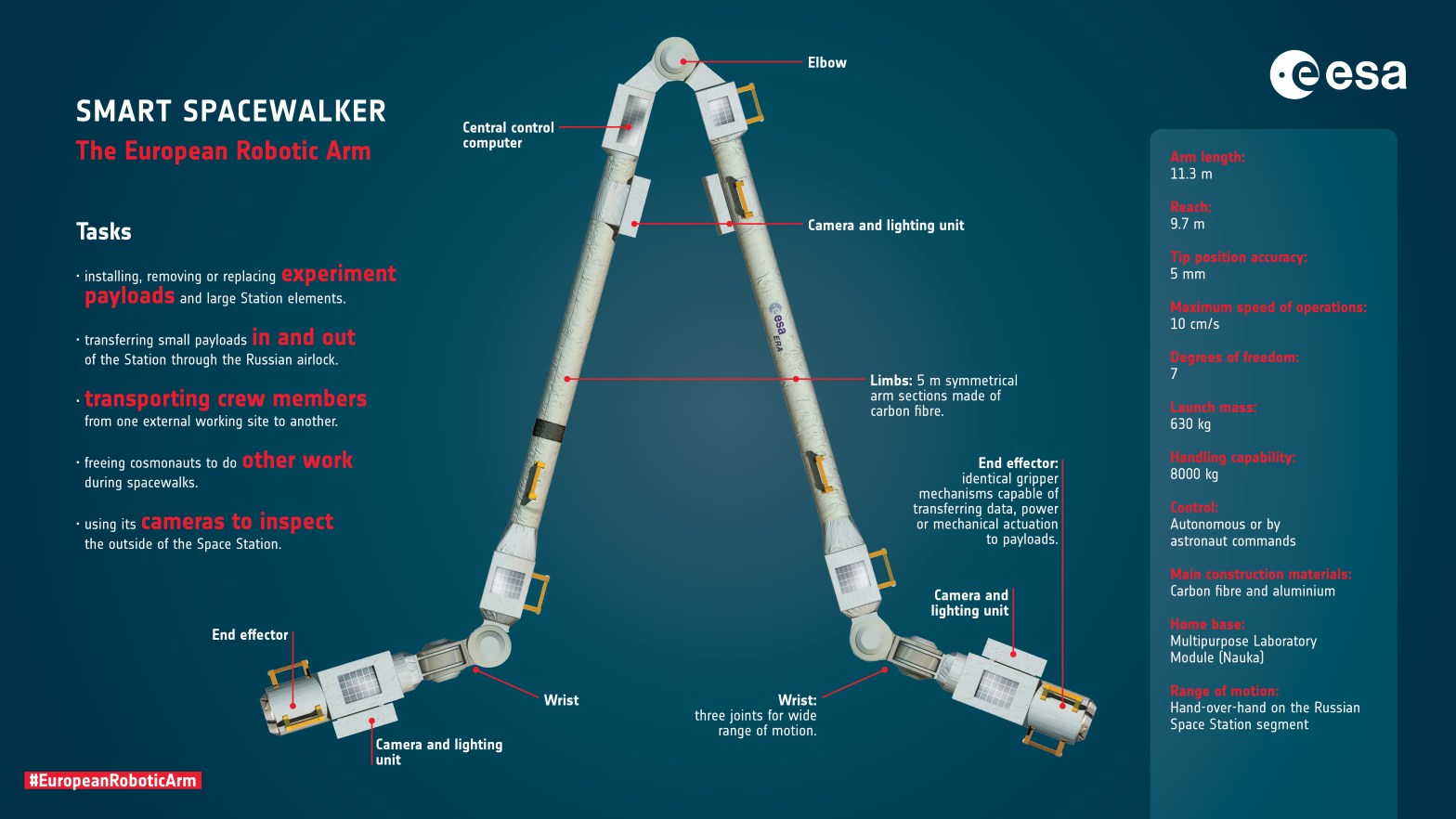
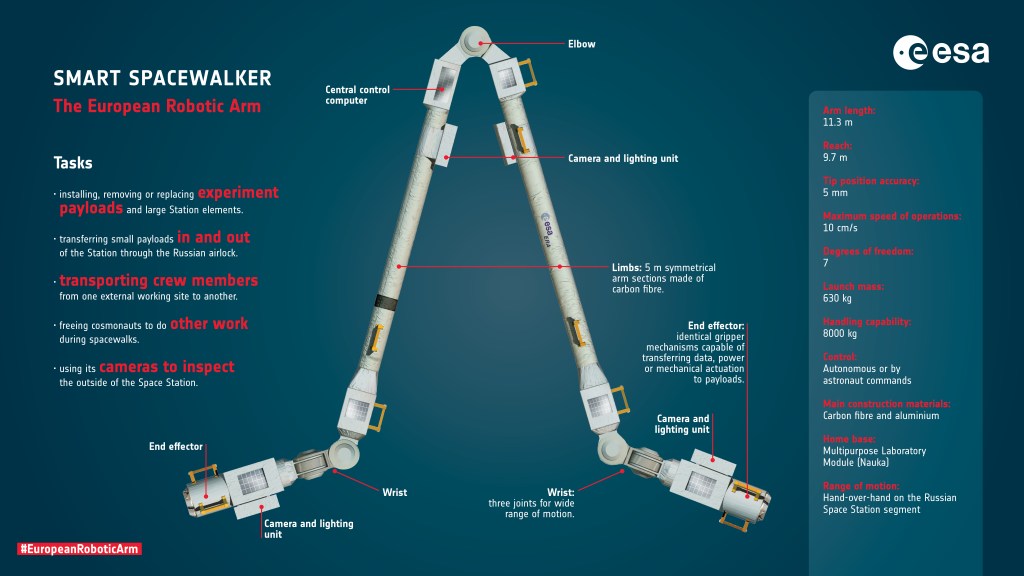
The European Robotic Arm specs and the tasks it will be expected to undertake. Image Credit: ESA
The robot will be capable of transporting small payloads in and out of the Space Station and can even assist in transporting astronauts to their spacewalks! It will also carry four infrared cameras which will be useful in conducting regular inspections outside the ISS.
The arm consists of 2 wrists, 2 limbs, and an elbow. Both ends of the arm are capable of acting as a ‘hand’ for the robot through its’ end effectors.
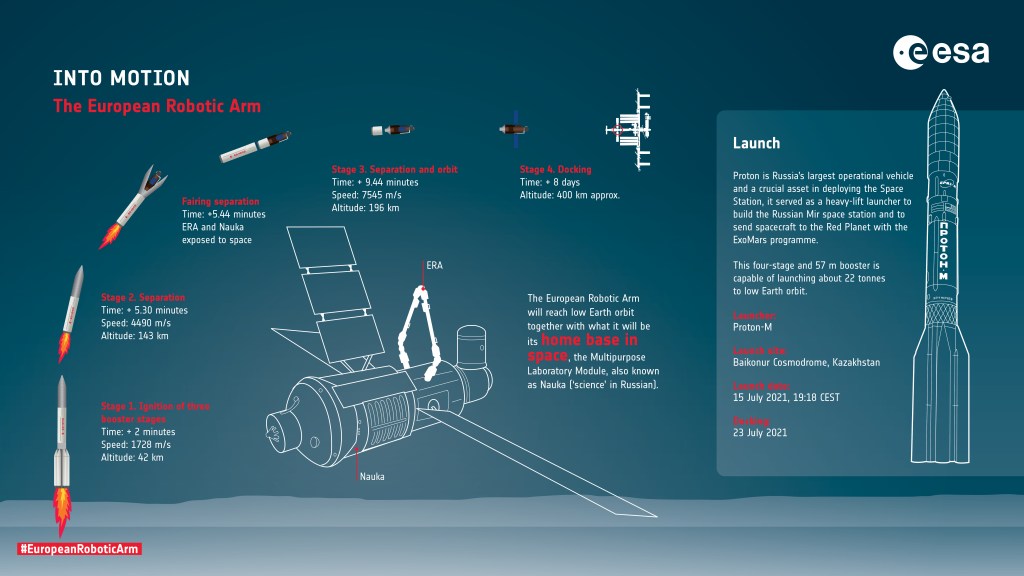
The launch is scheduled for the 15th July 2021 which should see the ERA along with its’ home base, the Multipurpose Laboratory Module (‘Nauka’), dock on ISS on the 23rd July 2021.
The mission timeline of the ERA with its home base, from launch to docking on ISS. Image Credit: ESA
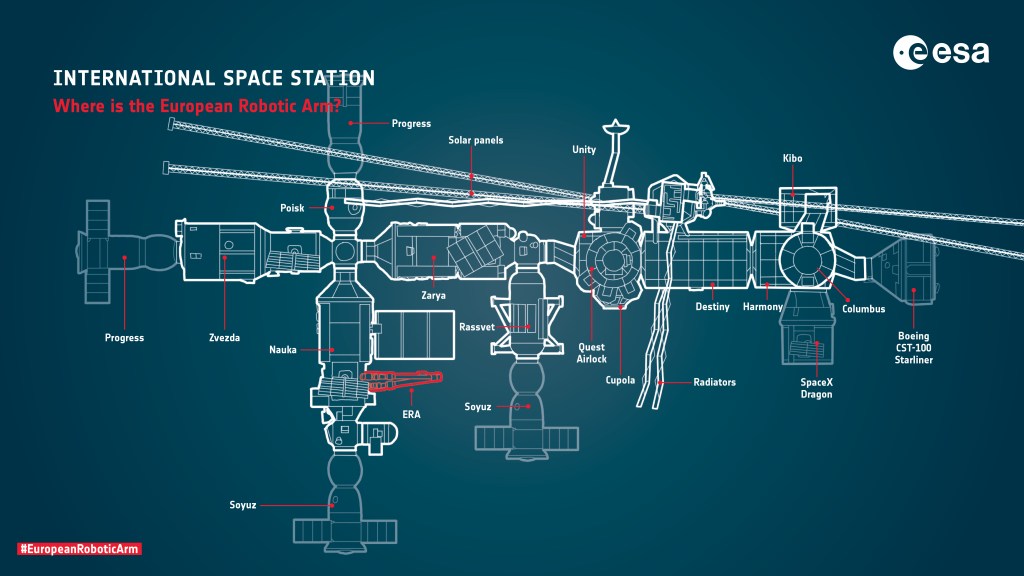
It will not be alone as a robotic arm on the ISS, with the US module’s ‘Canadarm2’ and the Japanese module’s ‘Japanese Experiment Module Remote Manipulator System’ still in use in orbit. However, the ERA will be the only one that can operate on the Russian module of the Station.
A schematic of the International Space Station with the European Robotic Arm’s position highlighted in red, attached to its homebase ‘Nauke’. Image Credit: ESA
Interesting things to note:
It will be the first robot capable of ‘walking’ around the Russian segment of the ISS
It has a length of over 11m; when outstretched, it could pass a football from the goalkeeper to the penalty spot!
When outside the Space Station, the astronauts can control it from inside; either in real time or it can be preprogrammed
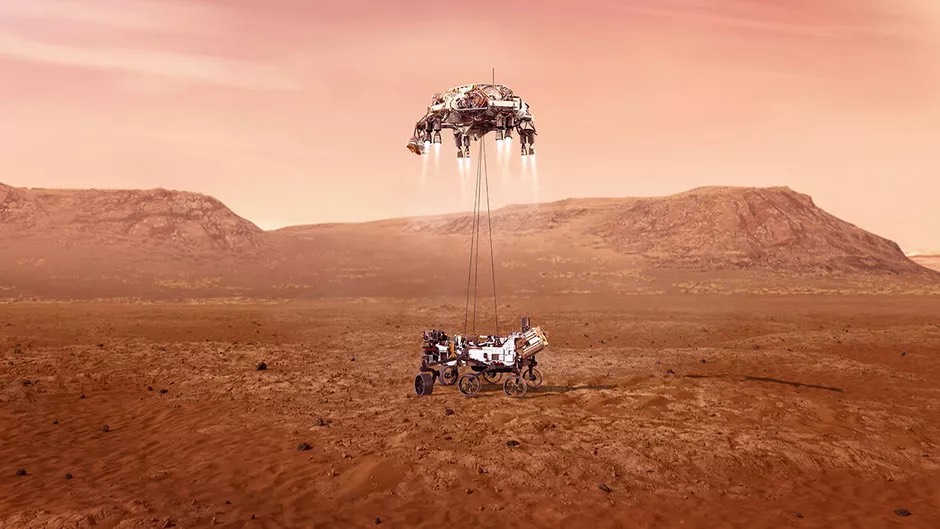
The fifth rover to land on Mars, the Perseverance Rover, was launched on July 20th 2020 and safely landed on the Red Planet on February 18th 2021 at 20:55 GMT. The spacecraft’s incredible journey saw it travel around 472 million kilometres in just over 210 days to reach its landing spot in the Jezero Crater. The goal of this mission is to seek for signs of ancient microbial life on Mars and to test technologies that could one day be useful for human exploration on Mars. The mission is expected to last for at least one Martian year (~687 Earth days).
The rover will drill into the rocky surface of Mars and retrieve rock and “soil” samples which the rover will seal in tight tubes and store on the planet surface. These will be collected by future missions to Mars and it’s hoped that they could all be brought back to Earth by 2031 – the very first time for Martian rock samples. Also tagging along on the ride is the very first Mars Helicopter, Ingenuity, aiming to attempt the first ever powered flight on another planet.
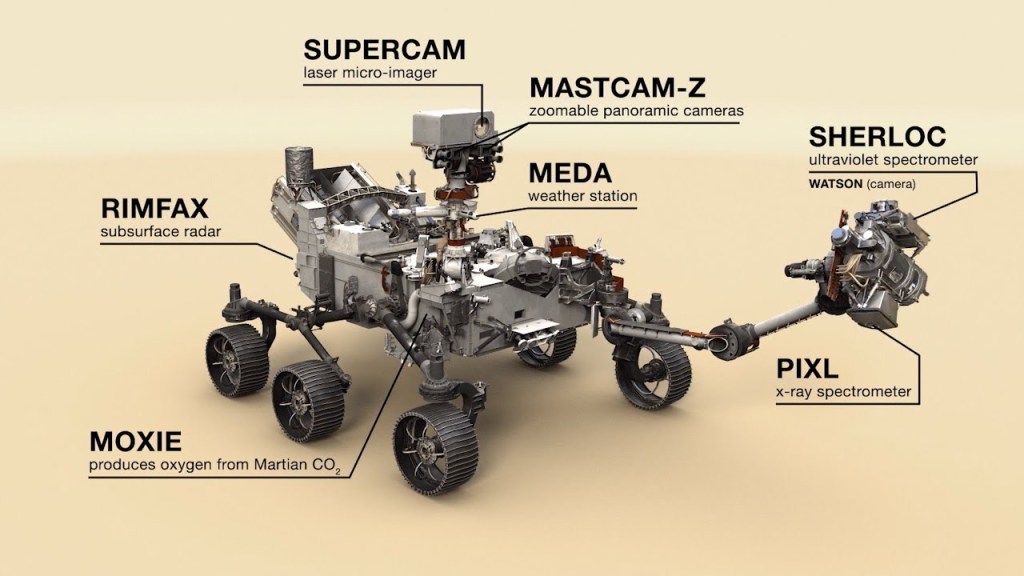
In summary, the 4 main science objectives for the mission: • To look for habitability and identify ancient environments which may have been capable of supporting microbial life in the past • To search for signs of microbial life which have been preserved in rocks on the surface of the crater • To prepare for human exploration on Mars by testing oxygen production using the Martian atmosphere and testing new landing technologies
EXCITING THINGS TO NOTE: – This mission is expected to do a great deal in paving the way for future human exploration of Mars – FIRST test of powered flight on another planet – FIRST self-driving rover, designed to be able to self-drive for up to 200m per day while still obtaining data of its tracks – FIRST rover to carry a microphone allowing us to experience the sound of another planet – FIRST retrieval of samples from Mars which will one day make their way back to Earth, a huge breakthrough in the study of the Martian terrain and mineralogy.

 Great British Take Off